
Beyond Hand Signals: Advanced Communication with Deaf Dogs
Master advanced deaf dog communication beyond basic hand signals. Learn technology integration, complex training systems, and cutting-edge methods for deeper connection with your deaf pup.
BEHAVIORTRAINING
DLC of Well Planned Pawrenthood in Collaboration with Dr. Alex Rivers, DVM
10/17/202512 min read

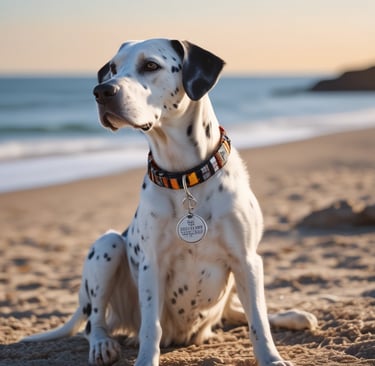
The morning Jemma learned to "read" my emotions changed everything. I was having a rough day—the kind where you're trying to hold it together but your body language screams otherwise. As I sat on the couch, shoulders slumped, she didn't just come to me. She performed her entire "comfort routine" in sequence: gentle paw touch, sit-stay while maintaining eye contact, then the careful lean-in she'd learned meant "I'm here." No hand signal. No vibration collar buzz. She'd moved beyond my explicit commands into reading the subtle language I didn't even know I was speaking.
That's when I realized we'd been thinking too small about deaf dog communication. We'd mastered the basics—sit, stay, come—but Jemma was capable of so much more. She was ready for the advanced curriculum, the kind of complex communication that transforms the relationship from "trainer-trainee" to genuine partnership.
Understanding the Communication Foundation
Before diving into advanced systems, it's crucial to recognize where deaf dogs actually excel in communication. While hearing dogs can become dependent on verbal cues and sometimes tune us out (we've all called a hearing dog's name five times with zero response), deaf dogs develop an intensity of visual focus that's genuinely remarkable.
Jemma watches me with an attention level that would make any hearing dog jealous. She tracks my micro-expressions, body positioning, even the tension in my shoulders. This isn't just learned behavior—it's survival adaptation that becomes a superpower when properly channeled.
Moving Beyond Single-Gesture Commands
Most pawrents stop at teaching individual hand signals: one gesture for sit, another for down, maybe a third for stay. That's kindergarten. Advanced communication involves chaining, where your dog learns to read sequences of signals that create complex instructions.
With Jemma, we've built sequences like: "Watch me" (attention cue) → "Wait" (pause) → "Go around" (directional) → "Return" (recall) → "Settle" (calm down). That's five distinct concepts communicated in rapid succession, allowing me to guide her through complicated real-world scenarios without ever touching her or getting within arm's reach.
Technology Integration for Next-Level Communication
This is where deaf dog training gets genuinely exciting in 2025. Technology has finally caught up with what deaf dog pawrents have needed for decades.
Vibration Collar Systems: Beyond the Basics
Most people think vibration collars are just for recall—buzz the collar, dog looks at you, done. That's using a smartphone as a paperweight. Modern vibration collar training involves conditioning multiple patterns that mean different things.
The Educator PG-300 (around $200) offers programmable vibration patterns. With dedicated training, you can condition:
Single short buzz = "Look at me"
Double buzz = "Come here now"
Long buzz = "Settle/calm down"
Triple buzz = "Emergency/danger"
The key is extensive positive pairing. Before that collar ever means "come here," you need 100+ repetitions of: buzz → treat appears immediately, regardless of what the dog is doing. Only after your dog gets excited by the vibration do you start adding the actual behavior request.
Budget Alternative: Basic vibration collars start around $40-60, but they typically offer only one vibration pattern. They work fine for single-purpose recall training if you're not ready to invest in multi-pattern systems.
Emerging Smart Collar Technology
The cutting-edge stuff happening right now involves AI-integrated collars that don't just send signals to your dog—they monitor your dog's responses and help you adjust training. Companies like Tractive have begun integrating activity tracking with training modules, allowing you to see patterns in your dog's behavior that correlate with training success.
While we're still waiting for the "perfect" deaf dog collar (and honestly, someone needs to invent a haptic vest that provides directional feedback—the concept exists but isn't commercially available yet), the combination of wearable activity trackers plus dedicated vibration training collars gives you serious capability.
Advanced Hand Signal Systems
Here's where pawrents who choose to invest serious time see transformative results. Moving beyond ASL-based signs into customized visual language that's specific to your dog and lifestyle.
Creating Non-Lure Based Signals
Most people teach hand signals by using food lures—the treat moves, the dog follows, the movement becomes the signal. That works for basics, but it's limiting. Advanced trainers use marker-based shaping to teach signals that have zero connection to food movement.
With Jemma, I taught "circle the object" by first capturing any movement around an object, marking it with my thumbs-up "yes" signal, then rewarding. Gradually shaped a full circle. Only then did I add the hand signal: a circular finger motion in the air. Now that signal means "circle whatever is nearby" and she generalizes it beautifully.
This approach lets you create signals for concepts that can't be lured: "go investigate that," "back up," "move left/right," "be calm around that specific thing".
Emotional State Communication
This is the Ph.D. level work, and where Jemma has honestly taught me more than I've taught her. Deaf dogs can learn to read and respond to your emotional state as a communication channel.
We've deliberately trained "comfort protocol" behaviors that activate when she reads my stress signals. I didn't teach her to detect my stress—she naturally noticed. What I did teach was what to do about it: specific behaviors that help me regulate, performed in sequence without requiring signals from me.
This requires understanding operant conditioning at a deeper level, but the practical outcome is profound: your dog becomes genuinely responsive to your emotional needs, not just your commands.
Ambient Visual Communication
Body language becomes your constant communication stream. Advanced trainers work on making their entire physical presence meaningful to their deaf dogs.
Jemma knows that:
Crossed arms + turned away = "I'm busy, settle down"
Open posture + face her direction = "I'm available for interaction"
Rapid movement toward the door = "We're leaving, get ready"
Slow, deliberate movements = "Calm energy right now"
None of these were explicitly trained as individual cues. They emerged through consistent patterns that she learned to read, which is how dogs naturally communicate with each other anyway.
App-Based Training for Deaf Dogs
The dog training app world has exploded, and while most aren't specifically designed for deaf dogs, several offer features that translate beautifully.
Puppr (around $10/month premium) provides video-based training demonstrations that you can watch with the sound off, making it naturally compatible with visual learning. The step-by-step breakdowns help you understand the mechanics of shaping behaviors, which is crucial for advanced deaf dog work.
The emerging AI-powered training apps analyze your dog's body language through your phone's camera, providing feedback on whether your dog is stressed, engaged, or confused during training sessions. This is invaluable for deaf dog training because you can't rely on vocalizations to gauge emotional state—you need to read pure body language.
Budget Tip: Many training apps offer free versions with basic content. Start there before committing to subscriptions.
Distance Communication Strategies
The biggest practical challenge with deaf dogs isn't complex behavior training—it's communicating when they're not looking at you. This is where advanced systems become essential.
Establishing Check-In Behaviors
The foundation of all distance work is teaching your dog that checking in with you is life's greatest joy. Not just occasionally—frequently and voluntarily.
We use what trainers call a "check-in schedule" with variable reinforcement. Sometimes Jemma gets rewarded just for glancing at me. Sometimes that glance needs to be held for three seconds. Sometimes the reward is huge (entire handful of treats), sometimes tiny (single piece). This variable ratio is the same psychology that makes slot machines addictive—and it makes checking in with you irresistibly compelling for your dog.
Light-Based Distance Cues
Flashlights become your voice at distance. But not just "shine light, dog comes." Advanced work involves conditioning different light patterns:
Steady beam = general attention getter
Flash-flash-pause = "come here"
Continuous flashing = "emergency, come immediately"
Beam moving in direction = "go that way"
Critical warning: Never use laser pointers as primary training tools. While they're mentioned in some older resources, they can trigger obsessive behaviors in dogs, creating more problems than they solve. Stick with traditional flashlights or LED keychain lights ($8-15) that create broader beams.
Vibration as Remote Communication
This is where that investment in a quality vibration collar pays dividends. Properly conditioned vibration cues work at distances where visual signals fail.
The advanced technique is teaching your dog that vibration means "look toward home base/handler" rather than "come immediately." This gives you more flexibility—the vibration gets attention, then your visual signal provides the actual instruction.
Multi-Modal Communication Systems
The most advanced deaf dog communication combines multiple sensory channels simultaneously for richer, more nuanced interaction.
Touch-Based Communication Vocabulary
Tactile cues provide intimate, precise communication in situations where visual signals fail—like when your dog is under furniture, in the dark, or when you need to communicate something subtle in public.
We've developed a touch vocabulary with Jemma:
Shoulder tap = "look at me"
Back of head gentle touch = "calm down/settle"
Both sides of body simultaneous touch = "stay exactly here"
Leg tap = "move away from this spot"
Each touch cue was trained the same way as hand signals: consistent pairing with specific outcomes and rewards. Now they're so ingrained that Jemma responds instantly, even from deep sleep.
Environmental Communication Setup
Your physical environment becomes part of the communication system. Advanced trainers create spaces that "talk" to their dogs.
We use floor vibrations deliberately. When I need Jemma's attention and she's in another room, a firm stomp on the hardwood floor sends vibrations she can feel. She's learned this means "check in with whoever made that vibration".
LED collars and light-up tags ($12-20) serve dual purposes: nighttime safety plus communication. We've conditioned Jemma to associate her collar light turning on with "heightened attention needed"—useful for evening walks when visual signals are harder to see.
Training Complex Behavior Chains
Once you've built the foundation, you can teach truly sophisticated behaviors that rival anything hearing dogs accomplish—sometimes surpassing them because of that intense visual focus.
Sport and Work Applications
Deaf dogs excel in many dog sports precisely because they're not distracted by ambient noise. Agility, rally obedience, and even scent work are completely accessible.
For agility, directional hand signals replace verbal cues. The advantage? Your dog is already watching you intensely for signals, making handling at distance actually easier than with hearing dogs who might focus on the obstacles rather than the handler.
Scent work and nosework are naturals because they rely on olfactory ability, not hearing. The challenge is communication during the search, which is solved through your advanced hand signal vocabulary.
Service and Support Work Adaptations
Multiple deaf dogs work successfully as emotional support and even service animals, using visual and tactile communication systems.
The key is teaching alert behaviors that don't rely on hearing environmental cues. For example, medical alert dogs can be trained to respond to changes in handler breathing patterns (visible) or scent changes rather than sounds.
Real-World Application Scenarios
Advanced communication proves its worth in everyday situations that basic hand signals can't address.
Veterinary and Grooming Success
Vet visits were initially Jemma's nightmare—too many people, unpredictable touches, stress through the roof. Advanced communication transformed these experiences.
We taught a specific sequence: "watch me" (maintains focus on me, not scary vet) → "steady" (hold still) → "accept touch" (allows handling) → "reset" (shake off the stress). The vet can perform examinations while Jemma stays focused on my signals rather than fixating on the scary procedure.
Pro tip: Bring high-value treats and maintain constant visual communication during vet visits. Your dog's attention on you is their security blanket.
Multi-Dog Household Dynamics
Deaf dogs in multi-dog homes need clear communication about dog-to-dog interactions, which is more nuanced than simple obedience.
We've taught Jemma signals for "disengage from play" (when things get too rough with our hearing dog Titan), "wait your turn" (during feeding time), and "go say hello/not now" for controlling greetings. These contextual signals only work because of the advanced foundation—she's learned that different signals apply in different situations.
Public Access and Socialization
Taking a deaf dog into public spaces requires preemptive communication strategies. Jemma has learned a "public mode" set of behaviors triggered by putting on her specific harness.
The harness itself becomes a meta-signal: "We're in public, advanced attention rules apply." She knows that in public mode, check-ins happen every 15-20 seconds, she stays within 3 feet of me, and certain fun behaviors (like greeting other dogs) are off the table unless I give explicit permission.
Common Challenges and Advanced Solutions
Even with sophisticated systems, challenges arise. Advanced training means advanced problem-solving.
When Hand Signals Become Too Similar
As you add more signals to your vocabulary, some inevitably look similar to your dog. Signal confusion is the advanced trainer's constant battle.
Solution: Periodically audit your signal vocabulary. Video yourself giving signals and watch it back. If two signals look even remotely similar from your dog's eye level, modify one. We had to completely change Jemma's "down" signal because it was too close to "wait"—both involved downward hand movement.
Attention Fatigue
Deaf dogs work harder than hearing dogs to maintain constant visual attention. Mental fatigue is real and leads to apparent "disobedience" that's actually exhaustion.
Advanced trainers recognize attention limits and build in deliberate "off duty" time where the dog isn't expected to maintain visual focus. Jemma has a specific "free time" signal that means "no job right now, relax".
Environmental Limitations
Dark environments, situations where your hands are full, or times when your dog is around a corner all limit visual communication.
This is where multi-modal systems shine. In the dark, vibration collar plus LED collar lights work. When hands are full, pre-trained environmental cues (like floor stomping) or tactical touch cues take over. Around corners, teaching your dog to check in every 20-30 seconds means they'll come looking for you.
Advanced Training Investment: Time and Effort
Real talk: building truly advanced communication with a deaf dog requires significant investment beyond basic obedience.
Expect to invest:
15-30 minutes daily of focused training for 6-12 months beyond basic obedience
Additional 3-5 hours weekly of "ambient training" (practicing signals during normal activities)
Periodic professional consultation to troubleshoot and advance ($100-200 per session, 2-4 sessions helpful)
Ongoing maintenance practice even after skills are solidified
The payoff is a dog who understands complex instructions, reads your emotional state, responds reliably at distance, and functions in varied environments with minimal stress. For pawrents who choose this path, the relationship becomes genuinely partnership-level rather than handler-pet dynamic.
Frequently Asked Questions
Can deaf dogs really learn as much as hearing dogs?
Absolutely, and often they learn faster once you establish clear communication. Deaf dogs aren't distracted by ambient noise and tend to maintain intense visual focus, which accelerates learning. The key is using methods that work with their sensory reality rather than against it. Studies of working dogs show deaf dogs perform equally well in tasks requiring obedience and problem-solving.
Do I need to use a vibration collar for advanced training?
Not necessarily, but it significantly expands your communication options, especially for distance and recall. Many successful deaf dog pawrents never use vibration collars, relying entirely on visual signals and strong check-in behaviors. However, if you want reliable off-leash capability or emergency recall, vibration collars are valuable tools when properly conditioned through positive reinforcement.
How do I prevent startling my deaf dog?
Systematic desensitization makes startling a positive experience. Start by approaching your awake dog and gently touching them in the same spot (shoulder is ideal), immediately followed by treats. Progress to touching them while they're drowsy, then sleeping. Eventually, teach a specific "wake up touch" that predicts good things. Most deaf dogs learn to wake calmly to touch within 2-3 weeks of consistent practice.
Can deaf dogs go to dog parks safely?
Yes, with preparation. Train a rock-solid visual recall first, and keep a vibration collar as backup. Practice frequent check-ins where your dog voluntarily looks at you every 20-30 seconds. Use an LED collar for visibility, and choose less crowded times initially. Some pawrents avoid dog parks entirely in favor of controlled play dates with known dogs, which is equally valid.
What's the biggest mistake people make training deaf dogs?
Treating deafness as a limitation rather than a different communication channel. The mistake is compensating for "what they can't do" instead of building on what they excel at—visual focus and environmental awareness. Second biggest mistake is inconsistency; visual signals must be performed exactly the same every time, or you're essentially speaking different languages.
Are certain breeds better at advanced deaf dog communication?
Breeds bred for visual work (herding dogs especially) often excel because they're genetically inclined toward watching handlers for cues. However, any breed can learn advanced communication—it's more about individual temperament and handler commitment than breed characteristics. Some of the most successful deaf service dogs are mixed breeds.
The Partnership Journey
Building advanced communication with Jemma hasn't just made her a well-trained dog—it's fundamentally changed how we relate to each other. She doesn't obey me; she partners with me. She reads my needs and responds before I give signals. I read her body language and adapt our activities to her emotional state. It's reciprocal in ways that basic obedience training never achieves.
The investment of time, patience, and yes, some frustration, has returned a relationship that's richer than what I have with our hearing dog, Titan. Not better, just different—more intentional, more visually intimate, more deliberately communicative.
For pawrents willing to invest in advanced deaf dog communication, you're not just teaching your dog more commands. You're building a shared language that's unique to your relationship, adaptable to your lifestyle, and sophisticated enough to handle complex real-world situations. That's not training—that's partnership.




This article was written by an experienced dog trainer specializing in positive reinforcement methods and deaf dog communication. All techniques mentioned are based on current force-free training practices supported by certified professional trainers and veterinary behaviorists. Last Updated: October 2025
Author Credentials: 8+ years experience with deaf dogs, specializing in advanced communication systems and multi-modal training approaches.
Resources
Your go-to hub for pet parenting tips.
Unleash Your Inner Pawrent
© 2025. All rights reserved.
Tiny paw-print note: We may earn on Amazon links—no extra cost to you, but it does fund our dogs’ ever-growing tennis ball obsession.