
Lost in Translation: Deaf Dogs and Social Cues with Other Dogs
Discover what life is really like for deaf dogs in social settings. Learn how deafness affects dog-to-dog communication, compensatory behaviors, safety protocols, and evidence-based training strategies for successful socialization.
LIFESTYLEBEHAVIOR
Well Planned Pawrenthood
10/26/202520 min read

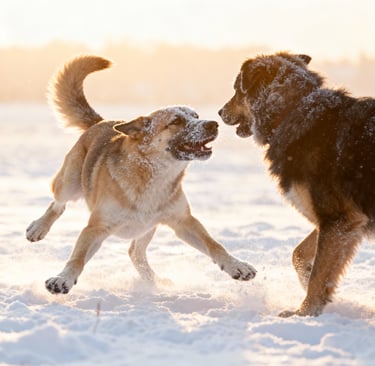
The morning Jemma launched herself at a friendly Golden Retriever in the park, I knew we'd entered uncharted territory.
She didn't hear the low warning growl. She missed the subtle shift in body language that hearing dogs pick up on instinctively. And when the Golden finally snapped—more of a "back off" correction than anything aggressive—Jemma looked genuinely shocked, like she'd been betrayed by a friend without warning.
Standing there with my heart in my throat, watching two confused dogs trying to make sense of what just happened, I realized something profound: Jemma wasn't being rude. She was operating with half the information.
If you have a deaf dog, you already know this dance. That split-second panic when another dog approaches. The constant vigilance required at dog parks. The awkward explanations to other pawrents about why your perfectly friendly pup sometimes misreads social situations. And if you're considering adopting a deaf dog, understanding these communication challenges isn't just helpful—it's essential for keeping everyone safe and happy.
Let's talk about what really happens when a deaf dog enters the complex world of dog-to-dog communication, and more importantly, how to help them navigate it successfully.
The Silent Gap: What Deaf Dogs Miss in Canine Conversation
Here's what most people don't understand about dog communication: it's not just body language.
Dogs have evolved an incredibly sophisticated communication system that layers visual signals, auditory cues, and even scent-based information to convey everything from "let's play!" to "I need space right now." Research shows that vocalizations—barks, growls, whines, and howls—carry critical contextual and emotional information that dogs use to navigate social interactions.
When a dog growls during play, the pitch, duration, and rhythm of that growl tell other dogs whether it's playful roughhousing or a genuine warning. Studies have demonstrated that humans can differentiate between playful, threatening, and food-guarding growls based solely on acoustic properties—and dogs are even better at this than we are.
But deaf dogs? They're reading the room with the sound turned off.
The Auditory Signals Deaf Dogs Can't Detect
Let's break down what's happening in the invisible sound landscape your deaf dog is missing:
Warning Growls: The low, rumbling growl that says "I'm uncomfortable, please give me space." This is often the first warning sign before a dog escalates to more defensive behaviors. Hearing dogs pick up on this instantly and typically respond by backing off or adjusting their approach. Deaf dogs plow right through this boundary marker.
Play Vocalizations: During play, dogs often emit specific vocalizations—higher-pitched growls, playful barks, and excited whines—that signal "everything I'm doing is friendly, even if it looks rough". These sounds help maintain the playful context and prevent play from escalating into real conflict. Without hearing these cues, deaf dogs may misinterpret play signals or fail to reassure their playmates that their intentions are friendly.
Distance-Increasing Signals: Barks serve multiple functions, including creating space between dogs. A sharp, staccato bark often means "stay away" or "don't come closer." Deaf dogs can't hear these spatial warnings, which can lead them to approach dogs who've already communicated their discomfort.
Subtle Vocal Cues: Not all dog communication is loud. Research shows that dogs use variations in pitch, tonality, and rhythm to convey nuanced emotional states. A slight huffing sound, a low grumble, or even the absence of vocalization in a typically vocal dog—all of these carry meaning that deaf dogs simply cannot access.
How Dogs Naturally Communicate: The Full Picture
To understand what deaf dogs are working with, we need to look at the complete communication toolkit dogs possess:
Visual Signals include body postures (play bows, freezing, cowering), tail position and movement, ear position, facial expressions, eye contact patterns, and movement speed and direction. These remain fully accessible to deaf dogs.
Auditory Signals encompass barks (varying in pitch, duration, and frequency), growls (contextual and emotional content), whines and whimpers, howls, and even silence (sudden cessation of vocalization as a signal). This entire channel is unavailable to deaf dogs.
Olfactory Signals involve pheromones, scent marking, stress signals detectable through scent, and individual identification through smell. Deaf dogs can access this fully and often develop enhanced olfactory awareness.

Tactile Signals include physical contact, mouthing and nibbling, body bumps and nudges, and play fighting. These remain available to deaf dogs.
The problem isn't that deaf dogs lack communication skills—it's that they're operating with approximately 25-30% less information than their hearing counterparts, based on the proportion of communication channels available to them.
🐾 Understanding the Communication Deficit
What Hearing Dogs Process:
Visual body language (100%)
Auditory signals (100%)
Scent-based information (100%)
Tactile cues (100%)
What Deaf Dogs Process:
Visual body language (100%)
Auditory signals (0%)
Scent-based information (100%+, often enhanced)
Tactile cues (100%)
The Translation Challenge:
When a hearing dog combines a play bow (visual) with a specific play vocalization (auditory), the message is crystal clear: "I'm inviting play, and everything that follows is friendly." A deaf dog sees the play bow but misses the vocal reassurance, creating potential for misunderstanding—especially if the play gets rough.
Key Insight: Deaf dogs aren't socially inept—they're processing social information through fewer channels, which means they need more exaggerated visual signals and more patient playmates to succeed in dog-dog interactions.
The Compensatory Superpowers: How Deaf Dogs Adapt
Here's where things get fascinating: deaf dogs don't just passively accept their communication disadvantage. They adapt.
Research on sensory compensation in animals consistently shows that when one sense is impaired, others often develop enhanced capabilities to fill the gap. In deaf dogs, this manifests in several remarkable ways that I've witnessed firsthand with Jemma.
Enhanced Visual Awareness
Deaf dogs become masters of visual information processing. They notice the slightest body language changes, catch peripheral movement that hearing dogs might miss, and develop an almost uncanny ability to read emotional states through posture and facial expression alone.
Dr. David Sands, a veterinary behaviorist specializing in deaf dogs, notes that deaf dogs "often develop heightened visual attention, becoming hyper-aware of movement and visual cues in their environment". This isn't just anecdotal—it's a documented compensatory mechanism.
With Jemma, I see this constantly. She picks up on micro-expressions in other dogs that my hearing dog Titan completely overlooks. She notices when another dog's ears shift slightly back, when a tail movement changes from broad sweeps to tight wags, when weight shifts subtly from front to back legs. She's reading body language at an expert level because she has to.
Increased Reliance on Scent
Deaf dogs also appear to develop enhanced olfactory processing. While the research here is less extensive than in vision studies, trainer observations consistently report that deaf dogs spend more time investigating scents and seem to gather more information through smell than their hearing counterparts.
This makes evolutionary sense—when one sensory channel closes, the brain reallocates processing resources to the remaining channels. Jemma's morning routine involves a fifteen-minute "scent check" of our yard that's far more thorough than Titan's cursory sniff-around. She's gathering information about who's been nearby, what animals have passed through, and probably details I can't even begin to understand.
Heightened Spatial Awareness
Because they can't rely on sound to orient themselves in space, deaf dogs often develop superior spatial memory and environmental mapping. They memorize layouts, track movement patterns, and maintain awareness of their surroundings in ways that seem almost supernatural.
This is particularly evident when Jemma is in a new environment. While Titan relies heavily on auditory cues to know where I am (my voice, footsteps, etc.), Jemma constantly maintains visual or scent-based tracking. She's mapped out every space we regularly visit and knows exactly where to look for me at any given moment.
The Challenge: These Superpowers Have Limits
But here's the hard truth: even with these enhanced abilities, deaf dogs still operate at a disadvantage in multi-dog social settings.
Why? Because the other dogs haven't adapted their communication style. Hearing dogs expect their vocalizations to be heard and responded to. When a deaf dog doesn't react appropriately to a warning growl or play vocalization, the hearing dog may interpret this as:
Rudeness: "I warned you and you ignored me"
Aggression: "You're not respecting my boundaries"
Incompetence: "This dog doesn't understand basic social rules"
None of these interpretations are accurate, but they can lead to social rejection, increased tensions, or even conflict.
Real-World Scenarios: When Translation Fails
Let me walk you through some common situations where Jemma's deafness creates social challenges, and what I've learned about managing them.
Scenario 1: The Startled Greeting
What happens: Jemma approaches another dog from behind. The dog doesn't realize she's there (no approaching paw-sound alert), and when Jemma reaches out to sniff, the dog whips around, startled.
Why it's problematic: The startled dog may react defensively, interpreting Jemma's approach as threatening because it lacked the normal auditory precursors. Even friendly dogs can snap when startled.
What I do now: I create noise to alert other dogs before Jemma reaches them. A light foot stomp, a soft "hey there" to the other dog, or tossing a small toy to get the dog's attention before Jemma makes contact. This gives the hearing dog the auditory warning they're expecting, even though it's coming from me rather than Jemma.
Scenario 2: The Escalating Play Session
What happens: Jemma plays beautifully with another dog. They're running, play-bowing, having a great time. But the other dog starts to get overstimulated or tired and begins emitting subtle "I need a break" signals—starting with soft grumbles or whines that gradually escalate.
Why it's problematic: Jemma doesn't hear the early warning signals. She keeps playing at the same intensity while the other dog gets increasingly stressed. By the time the visual signals are strong enough for Jemma to notice (pinned ears, stiff body, hard stare), the situation has already escalated too far.
What I do now: I watch the other dog like a hawk and intervene early. As soon as I see or hear early stress signals, I call Jemma for a "check-in" using her visual recall signal. We take a structured break—usually 30-60 seconds of calm attention on me—which gives the other dog time to decompress and resets the interaction.
Scenario 3: The Resource Guarding Misunderstanding
What happens: A dog at the park is guarding a stick or toy. Most dogs would hear the warning growl from a distance and give the resource-guarding dog a wide berth. Jemma walks right into the danger zone because she doesn't hear the warning.
Why it's problematic: Resource guarding is one of the most common triggers for dog-dog aggression. The guarding dog has already issued a clear warning ("stay away from my stuff"), and from their perspective, Jemma is deliberately ignoring it—which can trigger a defensive attack.
What I do now: I do the environmental scanning for Jemma. I'm constantly alert for other dogs who are near resources, and I proactively redirect Jemma away from these situations before she wanders into trouble. At our regular dog park, I've learned which dogs tend to guard resources and we maintain distance from them during high-value toy time.
🐾 Warning Signs to Watch in Other Dogs
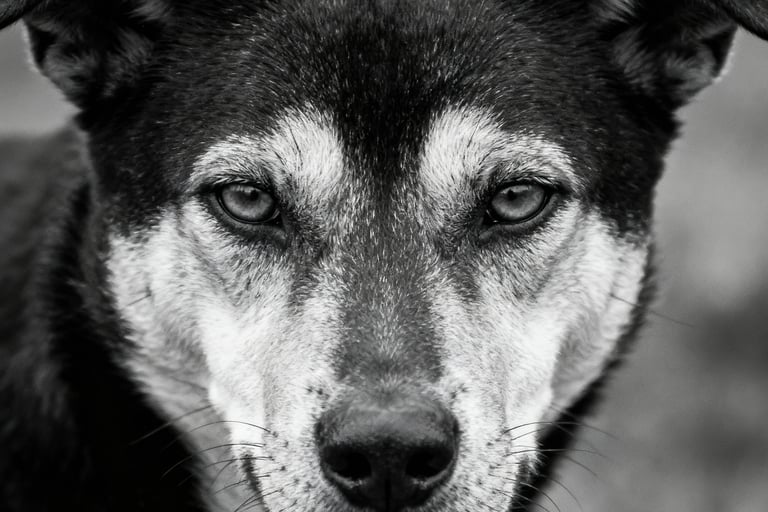
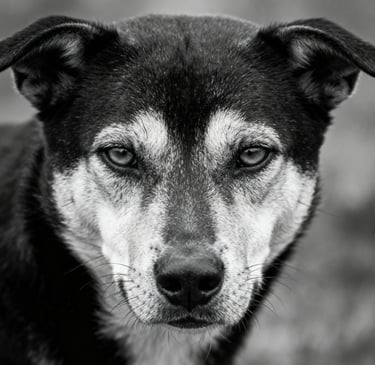
Since your deaf dog can't hear warning vocalizations, you need to be their ears. Watch for these visual escalation signals:
Early Warning (Mild Discomfort):
Lip licking when not near food or water
Turning head away or "looking away"
Yawning in non-tired contexts
Slowing down movements
"Freezing" briefly
Moderate Warning (Increased Stress):
Ears pinned back against head
Tail tucked or held low
Weight shifted to back legs
Whale eye (showing whites of eyes)
Stiff, tense body posture
Serious Warning (Imminent Reaction):
Hard, direct stare
Raised hackles
Stiff, upright posture
Curled lip showing teeth
Complete stillness before action
When you see any of these in dogs approaching your deaf dog, intervene immediately. Use your visual recall signal, create physical distance, or redirect to a different activity. Don't wait for your deaf dog to notice—they might not see these signals until it's too late.
Safe Socialization Protocols: Setting Deaf Dogs Up for Success
After three years with Jemma and countless hours researching deaf dog management, I've developed a systematic approach to socialization that prioritizes safety while still giving her rich social experiences.
Start with One-on-One Interactions
Forget the dog park at first. Even "friendly" multi-dog environments are overwhelming for a deaf dog learning social skills.
Instead, arrange controlled one-on-one playdates with known dogs who have excellent social skills. Look for dogs who:
Have calm, clear body language
Don't rely heavily on vocal communication
Naturally take breaks during play
Show patience with other dogs' quirks
Have tolerant, forgiving temperaments
Titan has been Jemma's best teacher. He's naturally gentle, uses exaggerated body language, and automatically adjusts his play style when Jemma seems confused. Not all dogs will be this accommodating, which is why careful selection is critical.
Start these playdates in neutral territory (not either dog's home) to minimize territorial stress. Keep them short—15-20 minutes for the first few sessions. Always supervise closely and intervene at the first sign of tension.
Gradually Increase Complexity
Once your deaf dog successfully navigates one-on-one play with several different dogs, you can slowly increase the challenge:
Small Group Play (2-3 dogs): Choose dogs your deaf dog has played with successfully individually. The dynamics shift when multiple dogs interact, so this is a meaningful step up in difficulty.
Larger Groups (4-5 dogs): Only attempt this if your deaf dog has shown consistent success in smaller groups. More dogs = more complex social dynamics = more chances for miscommunication.
Semi-Controlled Dog Park Sessions: Start with off-peak hours when fewer dogs are present. Many trainers recommend 5-6 dogs maximum as the safest number for a deaf dog in a group setting.
With Jemma, we spent six months doing one-on-one play before introducing a second dog. We spent another three months with small groups before attempting our first quiet-hour dog park visit. It felt slow, but rushing this process is how deaf dogs end up in dangerous situations.
Use the "Deaf Dog" Identifier System
This simple strategy has prevented more problems than I can count:
Physical identifiers:
Bright yellow or orange vest labeled "DEAF DOG"
Collar with "I AM DEAF" embroidered or on a tag
Bandana with "DEAF" clearly printed
Why this matters: Other dog owners will understand why your dog doesn't respond normally to vocal cues from their dogs. They'll watch more carefully, maintain closer control of their own dogs, and won't mistakenly think your dog is aggressive or poorly trained when they don't respond to another dog's barks.
At our regular dog park, everyone now knows Jemma is deaf. People automatically create more space when introducing their dogs to her, and they're quick to redirect their dogs if I signal that Jemma seems overwhelmed. This community awareness has transformed our park experience from stressful to enjoyable.
Master the Environmental Management Skills
You are your deaf dog's external awareness system. Accept this role fully and develop these critical skills:
Constant Scanning: Your eyes should constantly sweep the environment, noting:
Where other dogs are positioned
Which dogs are approaching
Early signs of tension in nearby dogs
Resources (toys, food, water) that might trigger guarding
Entry/exit points and escape routes if needed
Proactive Redirection: Don't wait for problems to develop. If you see a situation forming that could go wrong, redirect your deaf dog before they enter it. Use high-value treats, engaging toys, or your recall signal to move them away from potential conflicts.
Communication with Other Owners: Develop a quick, friendly script for other pawrents:
"Hey! Just wanted to let you know my dog is deaf, so she can't hear your dog's signals. She's super friendly but sometimes misses social cues. Mind if we introduce them slowly?"
Most owners appreciate the heads-up and will work with you to ensure a positive interaction.
Implement Structured "Check-In" Training
This is the single most important safety skill you can teach a deaf dog.
A "check-in" or "watch me" cue trains your dog to periodically look at you for direction. This gives you the ability to redirect attention, provide guidance, or recall your dog even in distracting environments.
How to train it:
Start in a quiet, low-distraction environment
Use a consistent visual signal (I use an open palm touching my chest)
The moment your dog makes eye contact, mark (thumbs up or flashlight flash) and heavily reward
Repeat until the signal reliably produces eye contact
Add duration—require 2-3 seconds of eye contact before marking/rewarding
Gradually add distractions as your dog succeeds at each level
Once established, randomly reward check-ins even when you haven't cued them. This creates a dog who naturally orients to you frequently, which dramatically improves safety in social settings.
Jemma now checks in with me every 10-15 seconds during off-leash play without any cue from me. This habit has prevented countless potential problems by giving me regular opportunities to redirect or provide guidance.
🐾 The Deaf Dog Socialization Checklist
Before Each Social Interaction:
☐ Dog is wearing "DEAF DOG" identifier
☐ I have high-value treats readily accessible
☐ I've identified exit routes if I need to leave quickly
☐ The other dog owner is aware my dog is deaf
☐ I've observed the other dog's body language and assessed temperament
☐ The environment is relatively controlled (not chaotic)
☐ My deaf dog is in a calm, focused state (not over-aroused)
During the Interaction:
☐ I'm actively monitoring both dogs' body language
☐ I'm ready to intervene at first signs of stress in either dog
☐ I'm rewarding my deaf dog for frequent check-ins
☐ I'm preventing my dog from approaching dogs showing stress signals
☐ I'm ensuring my dog gets breaks if play becomes too intense
Red Flags to End the Session Immediately:
☐ Persistent targeting of one dog by another
☐ Play that becomes one-sided (one dog trying to end it)
☐ Lack of role-reversals (dogs not taking turns being "chaser" and "chasee")
☐ Escalating intensity without breaks
☐ Either dog showing persistent stress signals
☐ Resource guarding behavior appearing in any dog
Technology and Tools: Helpful Aids for Deaf Dog Safety
The vibration collar debate in the deaf dog community is... complicated. Let me share what works, what doesn't, and what you should consider carefully.
Vibration Collars: The Nuanced Truth
The concept: A remote-controlled collar delivers a vibration sensation to get your deaf dog's attention from a distance. Theoretically, this provides the equivalent of calling your dog's name—a way to initiate communication when they're not looking at you.
What the research and expert trainers say:
Veterinary trainer Pat Miller, writing in Whole Dog Journal, found vibration collars "very useful" after systematic testing with three deaf dogs, noting that all three dogs responded positively after proper conditioning. The key phrase there is "proper conditioning."
Critical success factors:
Pair vibration with rewards first: Before using the collar to redirect or recall, spend 2-3 weeks conditioning your dog to associate the vibration with treats. Trigger vibration → immediately treat. Repeat 50-100 times until your dog shows happy anticipation when they feel the vibration.
Never use for correction: The vibration should mean "look at me, something good is happening," not "you did something wrong." Using it punitively destroys its effectiveness and can create anxiety.
Acclimate gradually: Start by holding the collar against your dog's leg or hip—not the neck—while it vibrates. This prevents startling and builds positive associations before collar wear.
Choose vibration-only models: Never use collars with shock capabilities, even if you intend to only use the vibration function. The risk of accidental shock activation isn't worth it.
When vibration collars are most useful:
Large, enclosed dog parks where your dog may be 100+ feet away
Off-leash hiking in secured areas where visual signals aren't always possible
Emergency recall situations when you need immediate attention
When they're not necessary:
Leashed walks (you have physical connection)
Small yards (visual signals work fine)
Controlled environments where you're maintaining close proximity
Honestly? We've used a vibration collar with Jemma for dog park sessions, and it's been helpful. But for 80% of our daily life, strong check-in training and visual signals work better. The collar is a tool, not a magic solution.
GPS Trackers: The Non-Negotiable Safety Tool
If you own a deaf dog, you need a GPS tracker. Not eventually. Not "I should probably get one." Now.
Why? Because if your deaf dog gets loose, you cannot call them back. They cannot hear you shouting their name. They can't hear your car horn or the sound of you running after them. And dogs who are lost and scared move fast.
What to look for in a GPS tracker:
Real-time tracking updates (every 2-5 seconds)
Reliable in your area (cellular vs. Bluetooth)
Waterproof and durable
Lightweight enough for your dog's size
Geofence alerts (notifies you if your dog leaves a designated area)
Jemma wears her GPS tracker on every walk, even though she's never off-leash in unsecured areas. Why? Because doors get left open, gates get unlatched, leashes break. It takes one mistake for disaster to strike, and a GPS tracker is the difference between "we found her in 20 minutes" and "we searched for hours."
Visual Training Tools
Flashlight or laser pointer (used carefully): A quick flash can get your deaf dog's attention from a distance. This works well for nighttime recall or getting attention across a yard.
Important: Never shine directly in your dog's eyes, and never use a laser pointer for play (this can create obsessive behaviors). Use only as an attention-getting device, then immediately follow with your visual cue.
Brightly colored training flags or target sticks: These help with distance training and creating visual boundaries. You can teach your dog that a raised yellow flag means "come to me" or that a specific colored cone marks where they should go.
FAQs: Your Most Common Deaf Dog Socialization Questions
Q: Can deaf dogs safely go to dog parks?
A: Yes, but with significant caveats. Start with off-peak hours when fewer dogs are present (5-6 dogs maximum is safest). Go to parks where you know the regular attendees and their dogs. Always keep your deaf dog clearly identified with a "DEAF DOG" vest or bandana. Never take your deaf dog to crowded, chaotic dog parks where you can't monitor all interactions closely.
Reality check: Some deaf dogs never do well at dog parks, and that's okay. Jemma thrives in controlled playgroups but gets overwhelmed at busy parks. Know your dog's limits and prioritize their comfort over your desire for them to be a "typical" dog park dog.
Q: How do other dogs react when they realize my dog is deaf?
A: This varies significantly by individual dog. Dogs with excellent social skills often naturally adjust—they use more exaggerated body language, approach more slowly, and show patience when your dog doesn't respond normally. These dogs are gold; cultivate relationships with them.
Other dogs get frustrated or confused by your deaf dog's lack of response to vocal cues. They may bark more insistently, become persistent in trying to get your dog's attention, or even show avoidance behavior. Some dogs simply cannot successfully communicate with deaf dogs and that's not anyone's fault—it's just a communication incompatibility.
Q: Do deaf dogs need a hearing dog companion as a guide?
A: No. This is a common misconception. Deaf dogs are fully capable of independent living and don't require a "hearing assistance dog" the way humans might need a service animal.
That said, many deaf dogs benefit from living with a well-socialized hearing dog. The hearing dog can serve as a social model, providing examples of appropriate dog-dog interaction. They can also act as an early warning system—when the hearing dog reacts to something auditory (doorbell, another dog approaching on a walk, etc.), the deaf dog learns to pay attention and prepare.
Titan has been invaluable for Jemma in this way. When he perks up his ears or turns toward a sound, she knows to be alert even though she can't hear what triggered his response. This partnership happens naturally; you don't need to train it.
Q: My deaf dog was attacked/had a negative interaction with another dog. How do I rebuild their confidence?
A: This requires patience and a structured desensitization approach. Don't rush back into group settings. Return to controlled one-on-one interactions with your dog's favorite, most trusted dog friends. Keep sessions short (5-10 minutes) and end on a positive note. Heavily reward calm, confident behavior around other dogs.
Consider working with a veterinary behaviorist or certified trainer who has experience with reactive or fearful dogs. The protocols are similar to those used for dogs with fear-based reactivity, but adapted for your deaf dog's communication needs.
It took Jemma three months to fully recover from that incident with the Golden Retriever. We went back to basics, rebuilt her confidence gradually, and now she's back to enjoying dog play. But we're also far more selective about who she plays with and how those sessions are structured.
Q: Should I avoid certain breeds or types of dogs?
A: Breed matters less than individual temperament. That said, dogs who rely heavily on vocal communication or who have very intense play styles can be challenging partners for deaf dogs.
Better selection criteria:
Dogs who use clear, exaggerated body language
Dogs who naturally take breaks during play
Dogs who are tolerant of other dogs' quirks
Dogs with calm, patient temperaments
Dogs who don't resource guard
I've seen Jemma play beautifully with everything from tiny Chihuahuas to massive German Shepherds. The size and breed don't predict success—the individual dog's social skills do.
Q: At what age should I start socializing a deaf puppy?
A: Start immediately, but with appropriate safeguards. The critical socialization period for puppies is 3-14 weeks, and deaf puppies need this exposure just as much as hearing puppies.
Focus on one-on-one interactions with vaccinated, stable adult dogs who have excellent social skills during this period. Avoid chaotic puppy classes unless the trainer has specific experience with deaf puppies and can ensure your pup isn't overwhelmed.
Puppy play is naturally mouthy and vocal—deaf puppies miss the verbal feedback when they bite too hard. You'll need to provide exaggerated physical reactions (gentle yelp, pull away dramatically, end play briefly) to teach bite inhibition.
Q: Can deaf dogs learn to play appropriately even if they miss auditory cues?
A: Absolutely. Deaf dogs can learn excellent dog-dog social skills; they just need more explicit teaching and more patient play partners.
Focus on building your deaf dog's visual communication literacy. Reward them for noticing and responding to other dogs' body language. Teach them that when another dog goes still or turns away, it means "I need a break." Use structured play sessions with clear beginnings, middles, breaks, and endings so your deaf dog learns the rhythm of healthy play.
With Jemma, I narrate interactions: when I see her playmate showing stress signals, I recall Jemma for a break. Over time, she's learned to recognize these patterns herself and now self-moderates far better than she did as a young dog.
🐾 Budget-Friendly vs. Premium: Deaf Dog Safety Tools
Budget-Friendly Options:
DIY "DEAF DOG" Identification ($5-15):
Print iron-on letters for existing bandana or vest
Permanent marker on bright cloth collar
Homemade embroidered or sewn patches
Basic Visual Training Tools ($10-30):
Standard LED flashlight for nighttime attention-getting
Colored training flags (use what you have)
Hand signals only (free!)
Smart GPS Tracking (Free-$10/month):
Apple AirTag in collar pouch ($29 one-time + $0 monthly)
Fi collar with basic plan ($149 collar + $99/year subscription)
Total Budget Setup: $50-75 initial + $8/month average
Premium Options:
Professional "DEAF DOG" Gear ($30-80):
Custom embroidered vest or harness from specialized companies
High-visibility, weather-resistant identification
Multiple identifier options (vest, collar, leash sleeve)
Advanced Training Tools ($50-150):
Quality vibration collar (WOLFWILL or similar: $50-80)
Professional clicker-flashlight combo units
Structured training flag sets with holder
Premium GPS Tracking ($200-400):
Garmin Alpha or similar professional tracker ($400+ one-time + $0 monthly)
Premium Fi collar subscription ($199 collar + $174/year)
Total Premium Setup: $280-630 initial + $15/month average
What I Actually Use (Practical Middle Ground - $150-200):
Professional embroidered "DEAF DOG" vest: $45
Basic WOLFWILL vibration collar: $60
Fi GPS collar with basic plan: $149 + $99/year
Standard LED flashlight: $15
Hand signals: Free
The Real Talk: The single most valuable "tool" is your attention and environmental awareness. I could have the cheapest setup in the world, but if I'm distracted and not monitoring Jemma's interactions, it won't matter. Similarly, the most expensive equipment can't replace good training and management.
Start with the budget basics. Add premium tools as you identify specific needs for your individual dog and lifestyle.
Living the Reality: What I Wish I'd Known from Day One
Three years into this journey with Jemma, here's what I want every new deaf dog pawrent to understand:
Your dog is not broken. Jemma communicates beautifully—just differently. She reads body language better than most hearing dogs I know. She's highly attuned to visual cues and environmental changes. She's not lacking; she's adapted.
You will become hypervigilant, and that's okay. I watch dog interactions with an intensity that probably looks excessive to casual observers. I intervene early and often. I say "no" to play situations that might be fine but might go wrong. This isn't paranoia—it's responsible management of a dog who operates with less information than her peers.
Some dogs will never be good play partners for your deaf dog. I spent months trying to help Jemma play successfully with a high-energy Border Collie in our neighborhood. That dog relied heavily on vocal cues during play and got frustrated when Jemma didn't respond. They just weren't compatible, and that's fine. Not every dog needs to be friends with every other dog.
The deaf dog community is invaluable. Online groups, local meetups, and trainer networks specializing in deaf dogs have taught me more than any book or article. These people understand the specific challenges you're facing and have creative solutions you won't find in mainstream dog training resources.
Your deaf dog will teach you to be a better communicator. I now notice subtleties in dog body language that I completely missed before Jemma. I've learned to communicate through intentional body positioning, clear visual cues, and patient repetition. These skills have made me a better pawrent to both my dogs.
It gets easier. The first six months were hard. I questioned whether I was equipped to give Jemma the life she deserved. But now? She has rich social relationships with several dog friends. She plays at the park (during careful, controlled sessions). She goes on adventures. She's confident, happy, and thriving. The management strategies that felt overwhelming at first are now second nature.
The Beautiful Part: Deaf Dogs in Translation
Here's what happened last week: Jemma was playing with a young Lab at the park. The Lab started getting overstimulated—I could see the early signs. But before I could intervene, Jemma noticed something was off. She didn't hear the Lab's increasingly frantic barks, but she saw the stiffening body language and the hard stare.
And she play-bowed.
It was perfect. That exaggerated visual signal—the universal canine "everything is friendly, let's keep this fun"—reset the entire interaction. The Lab relaxed, play-bowed back, and they continued at a calmer intensity.
Jemma had translated correctly. Without auditory information. Using pure visual communication that she'd learned through patient, consistent socialization.
That moment—watching my deaf dog successfully navigate a potentially challenging social interaction using the skills we'd built together—made every hour of training and vigilance worth it.
Your deaf dog can learn this language. They can build rich social lives with other dogs. They can be confident, successful social beings. It just requires you to be their translator, their advocate, and their guide through a world they experience differently than their hearing peers.
And honestly? That's what pawrenthood is all about anyway—learning to understand our dogs' unique perspectives and meeting them where they are. Deaf dogs just make that process more obvious.
Resources
Your go-to hub for pet parenting tips.
Unleash Your Inner Pawrent
© 2025. All rights reserved.
Tiny paw-print note: We may earn on Amazon links—no extra cost to you, but it does fund our dogs’ ever-growing tennis ball obsession.