
The Jogger Is Lava: Reactivity Toward Strangers
Does your dog bark or lunge at joggers and strangers? Learn why reactivity happens and discover practical, budget-friendly fixes for calmer walks.
BEHAVIOR
Well Planned Pawrenthood
9/8/20255 min read
You’re not alone!
Because nothing bonds pawrents like the shame of being dragged across a sidewalk at 7 AM: tell us your jogger-is-lava moment. We’ll laugh with you, not at you.
When Strangers Are the Boogeyman (On Two Legs or Two Wheels)
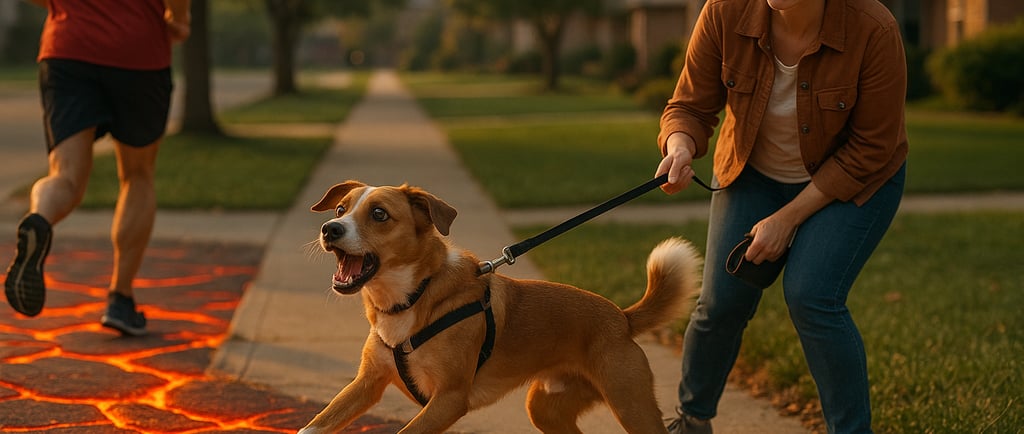
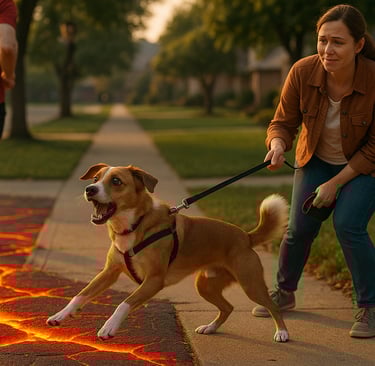
Picture this: you’re strolling along, enjoying the sunshine, maybe humming to your dog like it’s a Disney movie — and then, whoosh — a jogger or bike comes out of nowhere. Your dog launches like a heat-seeking missile, and suddenly you’re sprawled on the sidewalk with a knee that swells to grapefruit size for a week. (Ask Titan. And me. We had to outsource to Wag walkers while I limped it off.)
If you’ve ever felt like the sidewalk is booby-trapped with lava tiles and every jogger is a boss battle, congratulations: you’re in the reactivity club. Your dog isn’t broken. You aren’t a bad pawrent. And yes, progress is possible — even if right now it feels like you’re walking with a furry landmine.
Why Joggers Trigger Dogs So Badly
Dogs don’t see a “nice human out for cardio.” They see:
Unpredictable movement. Joggers come fast, straight at you, and usually without warning.
Predatory triggers. Quick motion flips the “chase” switch hardwired into canine brains.
Silent ninjas. Unlike chatty walkers, joggers and cyclists often glide by without noise. That’s unsettling to dogs whose survival instinct says: Things that sneak = bad.
And then there are the wildcards. Dogs often react differently depending on hats, strollers, hoodies, or even the direction someone approaches from. Jemma once proved this mid-bathroom break: a bike zipped by, the wind startled her, and when she turned her head it was right in her line of sight. She spooked so hard her poop shot out at high speed before she barked once and looked back at me like, “Well, that was rude.”
Titan vs. Jemma: Two Dogs, Two Flavors of Stranger Danger
Titan is a classic “distance-increasing” reactor. He sees a bike or jogger, and his answer is to bark, lunge, and say “Back off!” with his whole 70-pound body. When he lunged at a bike unexpectedly, I went down like a sack of potatoes. (10/10 would not recommend; my knee looked like modern art for a week.)
Jemma, on the other hand, is a startle reactor. Sudden movement — especially when she doesn’t have Titan to “interpret the world” for her — spooks her into barking or spinning toward the surprise. Without him, she’s actually less dramatic, because she’s not mirroring his “big dog energy.”
This is important: not all reactivity is the same. Some dogs want space. Some are startled. Some are overexcited greeters who look like Cujo from 20 feet away. Knowing your dog’s flavor makes training far more effective.
The Science of “Stranger Danger”
Reactivity is often mislabeled as “aggression.” In truth, it’s communication.
Barking/lunging = “You’re too close.”
Growling = “I’m overwhelmed.”
Jolting mid-poop = “I can’t handle surprises and potty at the same time.”
Patricia McConnell, one of the great dog behaviorists, calls it working under threshold: the distance at which your dog can notice a trigger without exploding. That’s the sweet spot where learning happens. Outside it? Training. Inside it? Bark-ageddon.
Training Solutions That Actually Work
Here’s where we trade lava floors for stepping stones:
Counterconditioning. Pair jogger appearances with treats so your dog learns: jogger = chicken rain.
The Look At That game. Popularized by Leslie McDevitt, this turns the trigger into a cue. Dog sees jogger → looks at you → gets reward.
Pattern games. Teaching predictable sequences (turn, treat, check-in) gives dogs structure amid chaos.
Default “get behind.” Train your dog to step behind you when something scary approaches. It tells them, “I’ve got the shield duty.”
Titan’s best moment? Sitting calmly as strangers passed on an off-leash hike, eyes darting but body still, focused on me with only whale-eyes of concern. Jemma’s magic trick? A gentle hip tap that cues her to snap focus back to me instead of spiraling into a bark-fest.
Management for Real Humans (Not Robots)
Training is lovely. But sometimes you just need to survive the walk.
Cross the street. No shame in avoidance.
Duck into driveways. Buy yourself a breather.
Be an anchor. With Titan, I wear an over-the-shoulder leash setup so I can literally plant myself.
Use retractables responsibly. In wide-open natural areas, retractables give Jemma freedom while I retain veto power. (For sidewalk training, though, it’s a no-go.)
Choose low-traffic routes. Decompression walks where the odds of joggers = slim to none.
Puppy vs. Senior Dogs
Puppies: Socialization is currency. Early exposure to calm joggers = future wins.
Adults & seniors: Old habits die hard, but new coping skills still stick. Titan’s older now, so management + predictability matter more than “fixing” him. Jemma, being younger, still has more plasticity in learning.
Tools of the Trade
Harnesses: Ruffwear Front Range for control, PetSafe Easy Walk for pullers.
Long lines: Biothane — easy to clean, doesn’t turn into spaghetti.
Muzzles: Baskerville Ultra — safe and treats-friendly. Normalize them; they’re seatbelts, not shame.
Calming gear: ThunderShirt, white noise machines at home.
Budget Pawrent Hacks
Because not everyone has $300/month for boutique training aids.
DIY long line: Biothane roll + hardware clips.
Traffic cone drills: Dollar-store cones for weaving games.
Frozen Kong fillers: Rotate cheap DIY fillings (yogurt, broth, mashed sweet potato).
Treat hack: Boiled chicken cubes beat overpriced boutique bags.
When It’s More Than Joggers
Some dogs graduate from jogger-lava to everything is lava. This is generalized reactivity, and it can extend to visitors, delivery drivers, or even kids on scooters. Safety protocols at home (gates, leashes, polite guest management) are crucial. Don’t white-knuckle it alone — a certified positive reinforcement trainer can customize a plan.
Progress, Not Perfection
Every pawrent dreams of the “golden walk.” The one where your dog sniffs, trots, and ignores the world’s chaos. They’re rare, but they’re proof of progress. Every golden walk with Titan and Jemma reminds me that it’s not about perfection. It’s about fewer explosions, faster recoveries, and reframing “bad days” as data points.
As Patricia McConnell says: bad walks aren’t failures; they’re information.
FAQs
Will my dog ever like joggers?
Maybe, maybe not. The goal isn’t jogger-friendliness, it’s calm indifference.
Are retractable leashes safe?
For crowded sidewalks? No. For open natural spaces with low traffic? Yes, if your dog’s recall is solid.
Do muzzles make things worse?
Only if you treat them like punishment. Properly trained, dogs are comfortable in muzzles — and it keeps everyone safe.
Final Pawrent Pep Talk
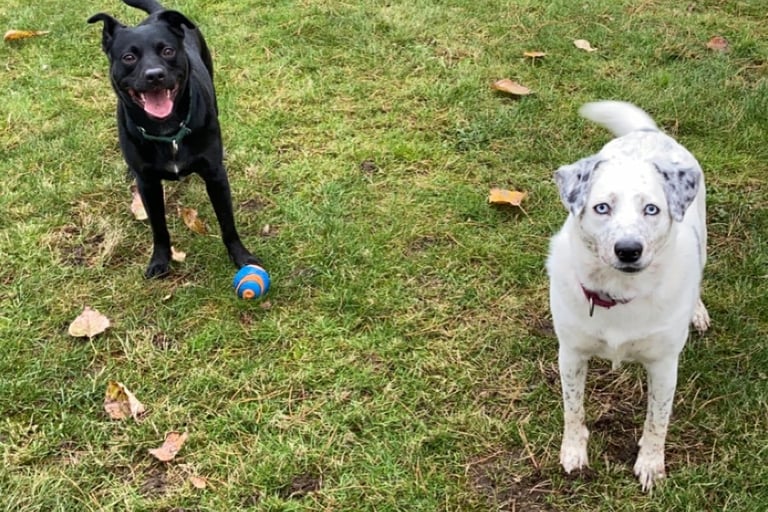
To Titan, joggers are lava. To Jemma, bikes are literal wind demons. But both of them have learned — with me as their anchor — that sidewalks aren’t designed to kill us. Your dog may never be besties with strangers on cardio missions, but with patience, management, and a little humor, you’ll find those golden walks that make all the lava worth it.
👉 Want a full subscriber-only breakdown of reactivity games and Titan & Jemma’s training logs? Don’t miss The Weekly Treat.
Resources
Your go-to hub for pet parenting tips.
Unleash Your Inner Pawrent
© 2025. All rights reserved.
Tiny paw-print note: We may earn on Amazon links—no extra cost to you, but it does fund our dogs’ ever-growing tennis ball obsession.