
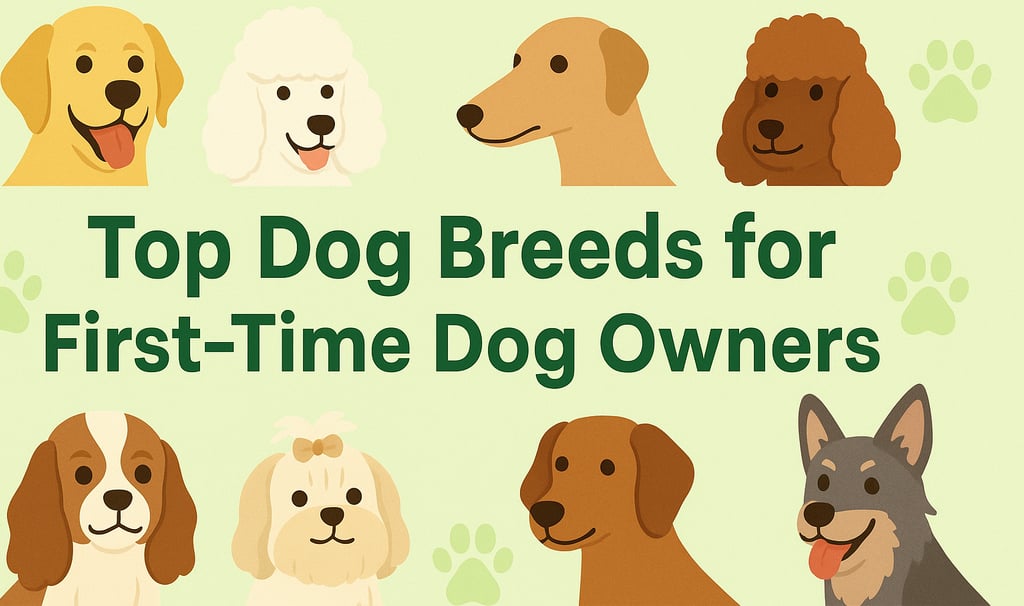
Top Dog Breeds for First-Time Dog Owners
Looking for your first dog? Explore the best beginner-friendly breeds, real pawrent stories, and tips to find the perfect match.
LIFESTYLE
Well Planned Pawrenthood
9/11/20257 min read
Finding "The One"
Bringing home your first dog is less like a Hallmark romance and more like a reality show where no one knows the rules.
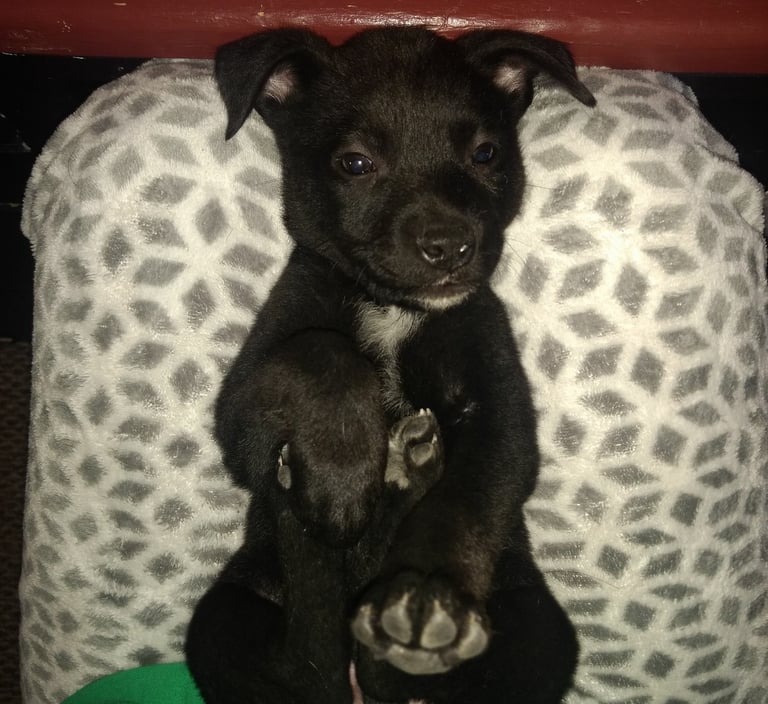
Titan was the first pup I chose as an adult. I found him through a Facebook post from someone with a backyard litter — not the route I’d recommend today, but fate sometimes arrives in imperfect packaging. During the first week, he let out a fart so loud he startled himself. Most people would have laughed and moved on. I laughed too, but what stayed with me was the recognition: this dog was meant to be mine. Not because he was flawless, but because he was unfiltered, unpolished, and willing to share every part of himself from day one. That clumsy moment set the tone for our relationship — real, ridiculous, and rooted in connection.
Every new pawrent rides this wave. You pore over breed lists, listen to friends, and scroll Instagram reels of perfect Golden Retrievers. Then reality arrives: hair on your black pants, teeth marks in your sneakers, and the occasional meltdown at 2 a.m. Some breeds genuinely make that transition gentler. But no dog is “plug-and-play.”
A Quick Note on Origins
If you’re beginning your dog journey now, skip the backyard litters and pet-store windows. Reputable rescues and responsible breeders not only set you up with healthier dogs, but also provide ongoing support and transparency. I got lucky with Titan. Not everyone does. But that luck came with a lesson: sometimes the imperfect path delivers the perfect teacher.
What Makes a Breed Beginner-Friendly?
“Beginner-friendly” doesn’t mean effortless. It means the dog gives you space to stumble while you learn. Usually these dogs:
Have steady, predictable temperaments.
Need enough exercise to stay balanced, but not so much they destroy drywall when you miss a day.
Are trainable without requiring graduate-level behavior theory.
Come with grooming and health needs that won’t bankrupt you.
Patricia McConnell reminds us that early mistakes are simply “data points.” A beginner dog absorbs those errors and lets you recalibrate. Titan was exactly that: steady enough that when I was late on training milestones, he gave me grace instead of chaos. Looking back, that patience wasn’t luck — it was what kept me from giving up.
The Gold Standards for First-Time Owners
Labrador Retriever
Labs are the forgiving clowns of the dog world. They thrive on food rewards, tolerate rookie mistakes, and laugh (metaphorically) with you while you figure out leash handling.
But tolerance doesn’t equal passivity. A bored Lab is a one-dog wrecking crew. According to the AKC, they’ve held the top popularity spot for decades not because they’re “easy,” but because they bend without breaking. They’re the canine equivalent of a seasoned teacher: they’ll let you stumble, but they expect recess every day.
Golden Retriever
Goldens are eternal optimists. They greet training with eagerness, strangers with wagging tails, and children with the patience of saints.
Their weakness? Shedding. My lint roller budget would have tripled had Titan been a Golden. Grooming isn’t optional; it’s a lifestyle. But Goldens prove a point: connection outweighs inconvenience. They’re dogs that teach beginners how rewarding cooperation can feel when you meet a breed’s needs halfway.
Cavalier King Charles Spaniel
Think velvet armchair in dog form. Cavaliers adapt easily to apartments, families, and even novice trainers. They’re affectionate without clinging, playful without overwhelming.
Health caveat: heart disease runs in the breed. For first-timers, that means learning early to budget for vet care. But Cavaliers show beginners something vital: dogs don’t have to be high-octane to bring joy. Sometimes the quiet, steady presence is exactly what you need. Titan embodied that in mutt form — steady to the core, teaching me calm is just as important as chaos.
Shih Tzu
Palace-bred companions turned apartment pros, Shih Tzus thrive in small spaces with moderate activity. They’re cheerful, adaptable, and beginner-friendly in temperament.
The trade-off? Their hair requires upkeep. For rookies, that grooming commitment can feel overwhelming. But grooming also becomes ritual. As Zak George notes, brushing isn’t just maintenance — it’s communication. The first time you realize your dog sighs and leans into the brush, you understand care is part of connection.
Greyhound (Retired Racers)
Paradox: the world’s fastest dogs are also champion loungers. Retired racers are gentle, quiet, and thrive on two brisk walks a day before collapsing on the sofa.
They do need cushioned beds and calm households. But their very presence teaches beginners an underrated lesson: stimulation doesn’t have to be constant. Jemma embodies this in her own way — because of her deafness, she isn’t distracted by every sound outside, defaulting to focus on me instead. That calm attentiveness is often exactly what new owners crave.
Poodle (Miniature or Standard)
Poodles are honor students: intelligent, adaptable, and hypoallergenic. Training them is deeply rewarding — as long as you stay ahead of their brains.
Without enrichment, they invent “fun” on your behalf, often in the form of home renovations you didn’t ask for. Grooming is non-negotiable, but the reward is a coat that sheds less and a dog that teaches you accountability. Poodles remind first-timers that intelligence is a gift and a responsibility.
Mixed Breeds (Mutts)
The underdog deserves its spotlight. Mutts combine traits in surprising ways, often giving you sturdy, adaptable companions without the baggage of strict breed expectations.
Titan and Jemma are both mutts, and their unpredictability became their strength. Titan wasn’t the snuggly lab/pit mix stereotype — he tolerated affection on his terms. At first, I thought that was a flaw. Later, I realized it was a gift. His independence taught me to respect a dog’s boundaries, a lesson far more valuable than any “ideal beginner breed” label.
Jemma’s deafness, too, reframed everything. At first, it seemed like a complication. Then I noticed how naturally she tuned into me. Without the constant static of sound, she focused fully on our connection. Of course, when she’s off-leash and flares up, her attention is harder to reclaim — but that challenge forces me to be clearer, calmer, and more intentional. Both of them showed me that what feels like an obstacle can be the very thing that forges the bond.
Breeds That Photograph Better Than They Live
Some breeds are Instagram-famous but beginner nightmares:
Siberian Huskies: Striking, vocal, and endlessly restless. Imagine parenting a wolf on espresso.
Belgian Malinois / German Shepherds: Brilliant working dogs, but overwhelming for amateurs. As Ian Dunbar puts it, they’re more “occupation” than pet.
Dalmatians: Behind the Disney spots lies energy, stubbornness, and medical quirks.
Tiny Toys (Chihuahuas, Yorkies): Fragile bodies with large egos. Beginners often confuse small with simple.
They’re not “bad” breeds. They’re just mismatched for rookies who expect companionship without a full-time job description.
Matching Breed to Lifestyle
Breed choice is really lifestyle math.
Apartments: Cavalier, Shih Tzu, Greyhound.
Active runners/hikers: Labrador, Golden, Standard Poodle.
Busy professionals: Adaptable mutts, Shih Tzu, Greyhound.
Families with kids: Golden, Lab, Cavalier.
Titan thrived in a third-floor walk-up not because labs/pits are natural apartment dogs, but because I was relentless with potty trips. Jemma thrives because I communicate in her language. Both proved the same point: your commitment is the real deciding factor.
Starter Kit for First-Time Owners
Adjustable Harness: Collars are medieval for leash training.
Puzzle Feeder: Redirects energy into problem-solving instead of destruction.
Deshedding Tool: For Goldens, Labs, and floofy mutts.
Orthopedic Bed: Prevention is cheaper than treatment.
DIY Snuffle Mat (Etsy): Affordable enrichment.
Grooming Kit: Clippers, brushes, nail grinder — the basics.
💡 Budget tip: Freeze carrots or braid old T-shirts into tug toys. Dogs don’t care about brands; they care about novelty.
FAQs
Q: Are mixed breeds easier than purebreds?
A: Sometimes. Their variety can buffer health risks and make personalities more adaptable. But no algorithm predicts personality — each dog is an individual.
Q: What’s the #1 mistake first-time owners make?
A: Confusing affection for training. Zak George puts it bluntly: “Love without structure creates confusion.” Dogs need both.
Q: Should I adopt or buy from a breeder?
A: Both can be responsible choices. Rescues often match you with beginner-friendly mutts, while ethical breeders ensure health testing and predictability. Red flag: anyone unwilling to answer questions or introduce you to the dog’s background.
Closing Thoughts
There’s no such thing as the perfect beginner breed. What matters is finding a dog whose temperament aligns with your life — and being willing to learn alongside them.
Titan taught me that steadiness is more valuable than snuggles. His independence forced me to respect his boundaries, which ultimately deepened our trust. Jemma taught me that what looks like a challenge — deafness — can become the very thing that creates focus and intimacy. Both reminded me that beginners need one dog at a time. Two is a luxury earned later, not a starting point.
So when you’re choosing your first dog, don’t look for easy. Look for fit. The rest will be fur, farts, and the kind of love you didn’t know you needed.
🐾 Share Your Story With Us
Every pawrent has an origin story — some heartwarming, some hard-earned, and some that start with a “never again” vow. Whether you brought your first dog home from a breeder who did everything right, adopted from a rescue that changed your life, or learned the hard way what not to do, your story can help guide new pawrents making their own decisions.
👉 Tell us:
What went right (supportive breeder, matchmaking rescue, perfect fit)?
What went sideways (hidden health issues, red flags, lack of support)?
What do you wish someone had told you before you signed the papers or handed over the leash?
Your experiences — good and bad — give other beginners the kind of real-world perspective that glossy brochures and Instagram reels can’t. Drop your story in the comments or send it to us directly, and we’ll feature select stories in future Planned Pawrenthood guides (with a shout-out to your pup, of course).




Resources
Your go-to hub for pet parenting tips.
Unleash Your Inner Pawrent
© 2025. All rights reserved.
Tiny paw-print note: We may earn on Amazon links—no extra cost to you, but it does fund our dogs’ ever-growing tennis ball obsession.